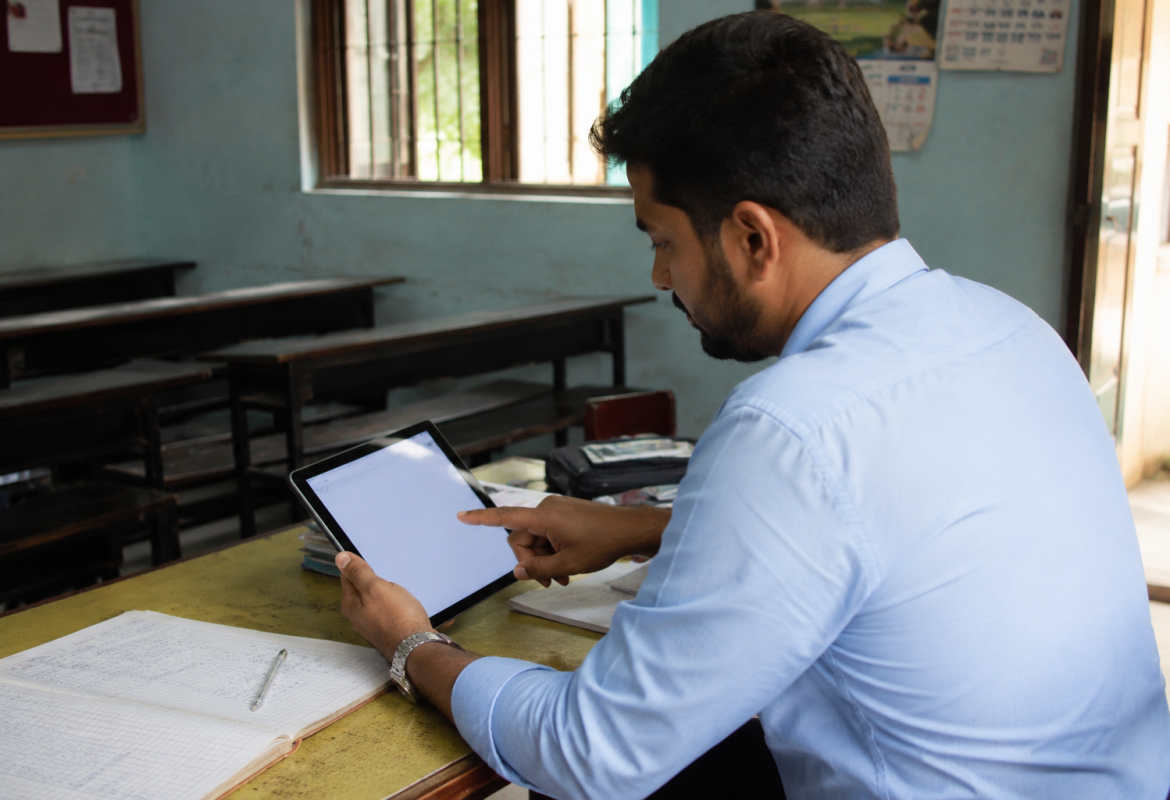
Many small schools and coaching institutes still begin each day the same way — calling out names, marking a register, checking who’s absent, and updating records by hand. It feels simple, familiar, and free. But as the number of students, batches and classes grows, this routine quietly starts consuming more time than most institute owners realize.
One of the biggest reasons small institutions hesitate to move away from this system is cost. There’s a common belief that digital attendance software means expensive hardware, complicated setup, and a budget only large schools can justify. But is that actually true, or is it a myth built on outdated assumptions?
Why Do Small Institutes Think Digital Attendance Is Expensive?
This belief didn’t come from nowhere. Early attendance software often did require installation, dedicated servers, IT support and a fair amount of technical maintenance — the kind of setup that made sense for a large school with an IT department, but felt completely out of reach for a coaching class with fifty or a hundred students.
At the same time, manual attendance has always felt “free” simply because the institute already owns a register and already pays its teachers. There’s no invoice for a notebook, so it doesn’t feel like an expense. But the real cost of attendance management was never just the price of the register — it was always the time and effort spent using it.
The Hidden Cost of Manual Attendance Management
Picture a normal day. A teacher takes attendance in every class, period after period. At the end of the week or month, someone — often the teacher themselves, or an admin staff member — has to go through those registers, calculate attendance percentages, identify students who are falling behind, and prepare a summary for parents or management.
None of this shows up as a line item on any budget, but it adds up. Manual attendance can quietly involve:
- Teacher and administrative time spent on repetitive record-keeping
- Difficulty locating old or specific records when needed
- Human error in entries and calculations
- Delays in identifying absenteeism patterns or informing parents
None of this means manual attendance is a bad choice for every institute. But when the actual time and effort involved are added up, the “free” register starts to look a lot less free than it first appeared.
So, What Does a Digital Attendance System Actually Cost?
There’s no single price tag that applies to every institution, and that’s actually good news for smaller ones. A coaching class with a few hundred students has very different needs from a school managing several thousand — and pricing usually reflects that.
In short: the cost of a digital attendance system depends on the number of students and users, the features required, whether biometric or mobile access is needed, and the level of support and implementation involved. A small institute typically doesn’t need the same infrastructure as a large one, which means it usually doesn’t pay for it either.
This is exactly why comparing “digital vs manual” purely on sticker price misses the point — the more useful comparison is total effort and time, not just the invoice.
Digital Attendance vs Manual Attendance: Looking Beyond the Price
| Area | Manual Attendance | Digital Attendance |
|---|---|---|
| Record management | Physical registers or spreadsheets | Centralised digital records |
| Reporting | Usually requires manual compilation | Can be generated more easily |
| Finding old records | Can take time to search through | Easier to access and organise |
| Administrative effort | Higher repetitive workload | Can reduce repetitive tasks |
| Scalability | Harder to manage as numbers grow | Can support a growing institute |
This doesn’t mean every small institute needs to switch immediately. The right choice depends on size, complexity and how much time is already being spent on attendance-related work. But looking only at software cost, without weighing it against the time already being spent manually, gives an incomplete picture.
How Digital Attendance Can Help a Small Institute
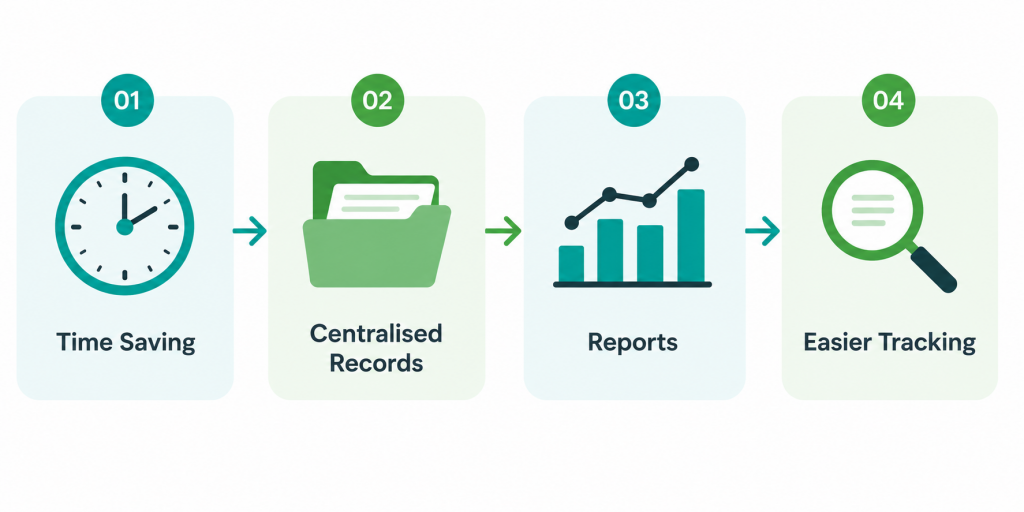
For a smaller institute, the real value of digital attendance usually isn’t about advanced technology — it’s about having everything in one organised place instead of scattered across registers and spreadsheets.
Less Time on Repetitive Work
Instead of manually compiling records at the end of every week, attendance data is already recorded and accessible, freeing up teacher and admin time for actual teaching and student support.
Easier Access to Records
Looking up a specific student’s attendance history, or checking a particular date, no longer means flipping through old registers — the information is organised and searchable.
Better Visibility into Patterns
Attendance trends and absenteeism can be spotted early rather than discovered weeks later, giving teachers and parents a chance to act while it still matters.
What Should a Small Institute Look for Before Choosing an Attendance System?
Choosing attendance software isn’t about picking the option with the longest feature list. For a smaller institution, the most useful system is often simply the one that solves the actual problem without adding unnecessary complexity.
A few things worth considering before deciding:
- Only the features you actually need – an enterprise-level system built for thousand-student schools may be overkill for a hundred-student coaching class.
- Ease of use – if teachers need extensive training just to mark attendance, adoption will be slow and frustrating.
- Reporting capability – the system should make it easier, not harder, to understand attendance data.
- Room to grow – a small class today may not be small in two years; the system should be able to scale with it.
- Total cost, not just subscription price – factor in setup, training and support, not just the monthly fee.
When Does Digital Attendance Actually Make Sense?
Not every institute needs to switch today. A very small institution with a handful of students and simple attendance requirements may be able to manage things manually without much difficulty, at least for now.
But as the number of students, batches and classes increases, manual processes tend to become harder to sustain — not suddenly, but gradually, one extra register and one extra report at a time. At that point, digital attendance becomes less about replacing a notebook and more about simplifying an administrativeprocess that has quietly become a burden.
Where Does MyClassAdmin Fit into This?
Institutes that decide to move from manual to digital attendance generally need a system that fits into their existing routine rather than forcing a complicated new one on their staff. MyClassAdmin’s attendance management software is built with this in mind — helping schools and coaching classes track daily or lecture-wise attendance digitally, reduce proxy attendance, and automatically keep parents informed through the parent app, without requiring the kind of infrastructure only a large institution could justify.
For institutes already using MyClassAdmin’s school management software for other administrative work, attendance fits naturally into the same platform rather than existing as a separate, disconnected tool.
Frequently Asked Questions
Is a digital attendance system expensive for small institutes?
Not necessarily. Cost depends on the number of students, features required and level of support needed. Small institutes typically don’t need large-scale infrastructure, which usually keeps costs proportionate to their size.
Can small coaching institutes use digital attendance systems?
Yes. Many digital attendance solutions are designed to scale, meaning a coaching class with a few hundred students can use the same core system as a larger school, just with fewer features enabled.
What are the benefits of a digital attendance system?
It can reduce repetitive administrative work, make records easier to access, simplify reporting, and help identify absenteeism patterns earlier than manual tracking typically allows.
Is digital attendance better than manual attendance?
It depends on the institute’s size and needs. For very small institutions, manual tracking may still be manageable. As student numbers grow, digital systems generally reduce administrative effort more effectively.
What should small institutes consider before choosing attendance software?
Focus on necessary features, ease of use for teachers, reporting quality, room for future growth, and total cost — including setup and support, not just the subscription price.
About MyClassAdmin
MyClassAdmin is a School and Coaching Institute Management Software built for educational institutions across India. From student attendance and fee management to homework, report cards, and parent communication, it brings the everyday administrative work of schools and coaching centres into one connected platform, helping administrators and teachers spend less time on paperwork and more time on students.
Sales Enquiries: Vidya — +91-9503273330
Technical Support: 91-7775048333 | mailto: mailto:info@myclassadmin.com
Want to see how digital attendance works in your school?
Visit MyClassAdmin and experience hassle-free attendance management.